How to Thicken or Thin a Curry Without Ruining It
Fix a watery or too-thick curry tonight with simple pantry fixes, and learn which method suits which dish so the flavour stays where it belongs.
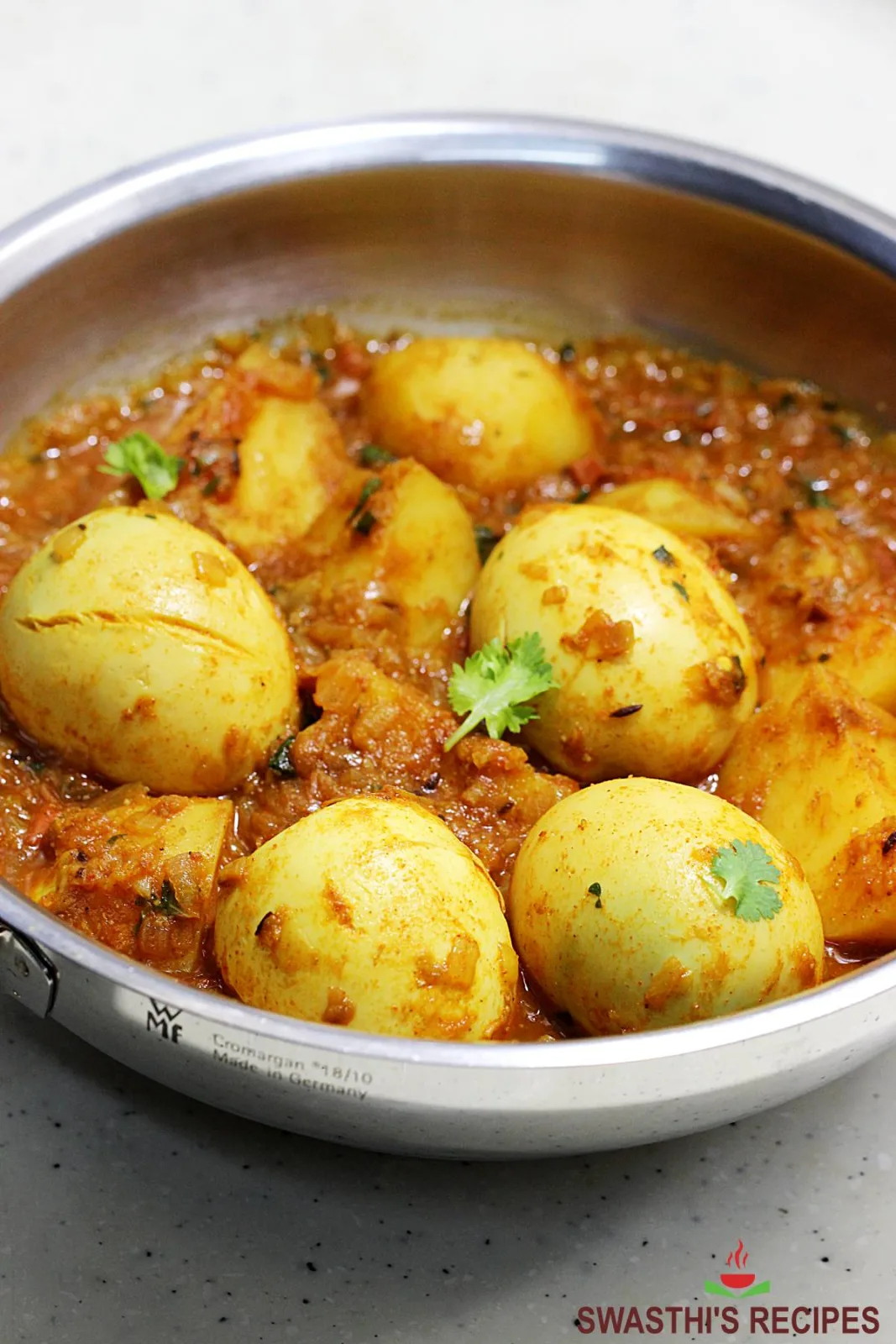
A curry that is too runny or too stodgy is almost always fixable. The trick is choosing a fix that suits the dish, and making it slowly. Here is how to adjust the consistency of your curry while keeping the flavour intact.
First, decide what "right" looks like
Not every curry should have the same texture. Before you change anything, think about what you are making:
- Dry-ish, clingy masala (aloo anday, bhindi, keema): the gravy should coat the ingredients, with oil just starting to separate at the edges.
- Medium gravy (most salans, fish and chicken curries): it should coat the back of a spoon and run off slowly.
- Loose, soupy curry (kadhi, dal-style curries, Thai curries): pourable, but not watery. It should still cling a little to rice.
Remember too that curry thickens as it cools and as it sits. If it looks slightly loose in the pot, it may be perfect by the time it reaches the table.
How to thicken a curry
1. Simmer it uncovered
The simplest method is also the best for flavour. Remove the lid, turn the heat to medium, and let water evaporate. Stir every minute or so, especially near the end, so the base doesn't catch and burn.
This concentrates the spices instead of diluting them. It works well for tomato-based gravies, fish curries and anything with plenty of onion. Give it 5–10 minutes and check.
2. Mash some of the vegetables
If your curry contains potatoes, lentils or chickpeas, press a few pieces against the side of the pot with the back of a spoon. The starch releases into the gravy and thickens it naturally.
This is ideal for a dish like Aloo Palak or Aloo Anday, where potatoes are already there to help. Crush just a few pieces; you want a thicker gravy, not mash.
3. Bhuno the masala longer
If you are still at the stage where the onion-tomato base is cooking, fry it longer. Keep stirring until the oil separates and the paste darkens slightly, before adding water. A well-fried base gives a thicker, richer gravy from the start, so you need less rescuing later.
4. Add a paste or purée
For a gravy that needs body, blend one of these and stir it in:
- A handful of fried onions, blended smooth with a little water
- Soaked and ground cashews or almonds
- A spoonful of ground poppy seeds or melon seeds (magaz)
- A small amount of tomato purée
Add it a spoonful at a time and simmer for a few minutes so it cooks through and doesn't taste raw.
5. Use yogurt or cream carefully
Whisked yogurt adds body and tang, but it can split if added to a boiling pot. Whisk it until smooth, lower the heat, and stir in a little at a time. Cream or coconut milk can go in at the end and needs only a gentle simmer.
6. Use a slurry as a last resort
If you need thickness quickly, mix 1 tablespoon of cornflour (or besan) with 3 tablespoons of cold water until smooth. Stir it into the simmering curry and cook for 2–3 minutes.
- Cornflour gives a glossy, clear finish. It suits Thai and other coconut-based curries.
- Besan (gram flour) adds a nutty flavour and suits yogurt-based dishes. Cook it thoroughly or it tastes raw.
Never sprinkle dry flour straight into the pot. It will clump.
How to thin a curry
A curry that has become too thick, or has reduced too far, is easier to rescue than a watery one.
Add hot liquid, not cold
Cold water dropped into a hot masala can dull the flavour and make the gravy look pale. Use hot water from the kettle, or better, hot stock. Add about 60 ml (a small cupful) at a time, stir, and let it come back to a simmer for a couple of minutes.
Choose the right liquid
- Water is fine for most home-style curries.
- Stock adds more flavour to meat and vegetable curries.
- Coconut milk suits Thai and southern-style curries such as Thai Green Vegetable Curry or Malabar Prawn Curry.
- Milk can loosen a creamy, mild gravy, but add it gently over low heat.
Then rebalance the seasoning
Thinning dilutes salt, spice and sourness. After adding liquid, taste and adjust:
- A pinch of salt
- A little garam masala or ground cumin
- A squeeze of lemon or a bit of tamarind, if the dish needs brightness
- A small spoon of tempered oil (tarka) with garlic, cumin or dried chillies
A tarka poured on at the end is one of the best ways to bring a diluted curry back to life.
Match the fix to the curry
| Curry | Too thin? | Too thick? |
|---|---|---|
| Potato curries | Mash a few potatoes, simmer uncovered | Add hot water, adjust salt |
| Fish and prawn curries | Simmer gently; avoid stirring too hard | Add hot water or coconut milk in small splashes |
| Yogurt curries | Simmer longer; a little besan slurry | Whisk in hot water gradually |
| Thai coconut curries | Simmer, or use a little cornflour slurry | Add coconut milk or stock |
Special cases
Fish and prawns. Seafood turns rubbery if it's cooked too long, so don't reduce a gravy with the fish already in it. Lift the pieces out with a slotted spoon, reduce the sauce, then return them for the last minute. This works well for Masala Fish Curry and the Malabar prawn dish above.
Yogurt and gram flour curries. Kadhi Pakora is thickened by besan from the start, and it keeps thickening as it simmers and stands. Stir often to prevent sticking, and thin it with hot water if it becomes too heavy. Add the pakoras near serving so they don't dissolve into the sauce.
Leafy curries. Spinach releases water as it cooks. If your saag or palak is loose, cook it uncovered until the moisture evaporates, rather than adding flour.
Common mistakes
- Adding too much thickener at once. Go slowly and wait a couple of minutes between additions.
- Turning up the heat too high. Rapid boiling can split yogurt and burn the base.
- Forgetting to stir. Thick gravies stick to the bottom of the pot quickly.
- Skipping the final taste. Any change in texture also changes the balance of salt and spice.
- Over-fixing. Rest the curry for five minutes off the heat, then judge again.
A quick rescue routine
- Taste first, and check the consistency off the heat after a minute.
- If too thin, simmer uncovered for 5–10 minutes, mashing a few vegetables if you have any.
- If still thin, add a blended onion or nut paste, or a small slurry.
- If too thick, add hot water a little at a time.
- Correct the salt, spice and acidity, and finish with a tarka if you like.
Once you get used to how your own pot and stove behave, you will start to catch a curry at the right moment, before it needs any rescue at all.
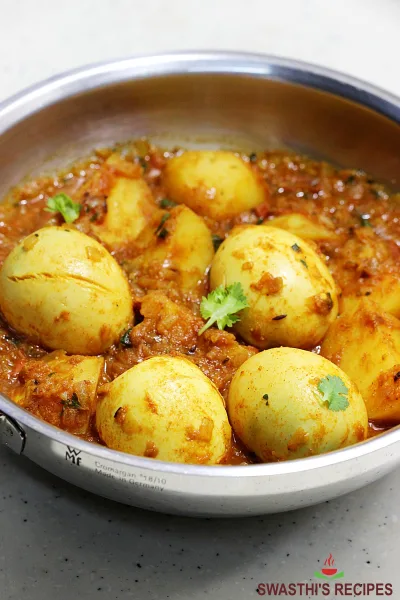 Pakistani
Aloo Anday
Tender potatoes and turmeric-crisped boiled eggs in a light, cumin-scented tomato gravy. It is a budget-friendly lunch that comes together with pantry staples and goes well with roti or rice.
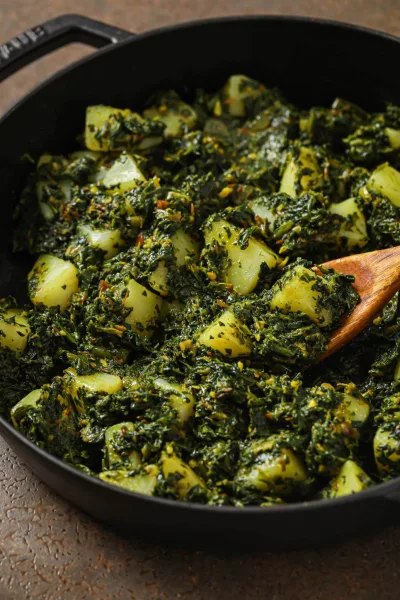 Pakistani
Aloo Palak
Tender potatoes simmered in a smooth spinach and onion-tomato masala, finished with garam masala and lemon. A simple everyday sabzi that is ready in under an hour and suits roti or rice.
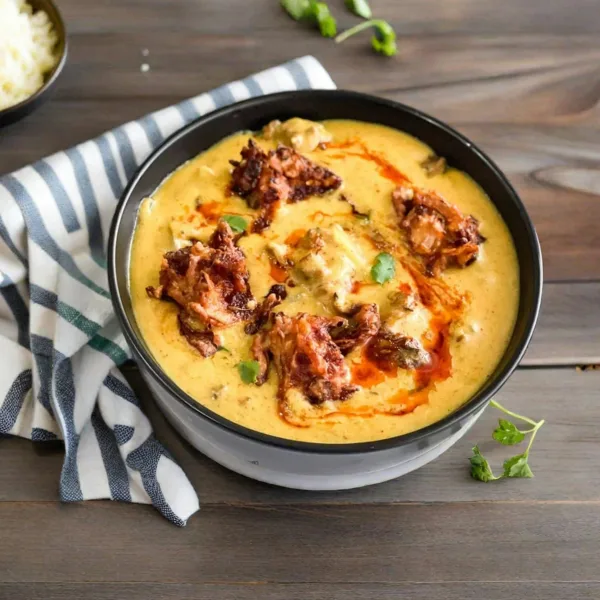 Pakistani
Kadhi Pakora
A tangy, silky yogurt and besan curry simmered slowly and topped with soft onion pakoras and a sizzling cumin-chilli tarka. It's a comforting Punjabi-style lunch to serve with plain rice.
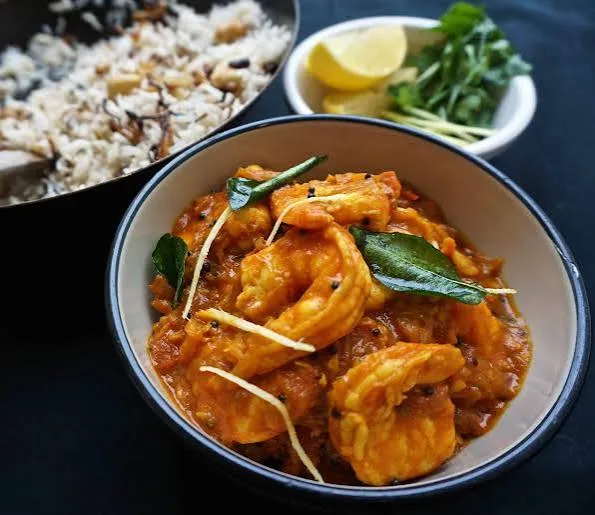 Indian
Malabar Prawn Curry
A tangy, gently spicy prawn curry from the Kerala coast, built on coconut milk, tamarind and a mustard and curry leaf tempering. It's ready in under an hour and goes well with plain rice.
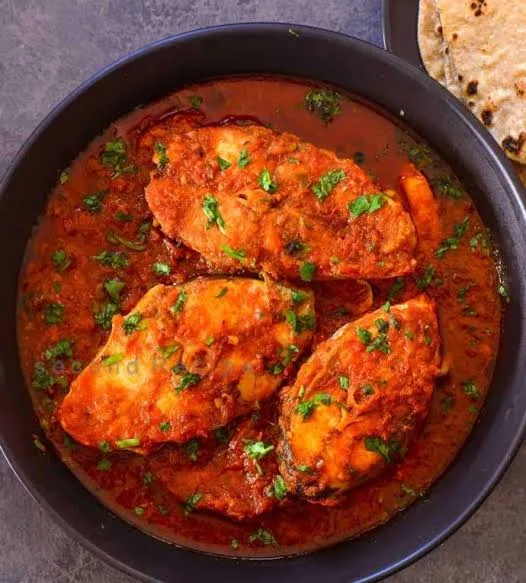 Pakistani
Masala Fish Curry
Firm fish steaks simmered in a bold onion-tomato masala with cumin, fenugreek and green chillies. It's a quick weeknight curry that goes well with plain rice or roti.
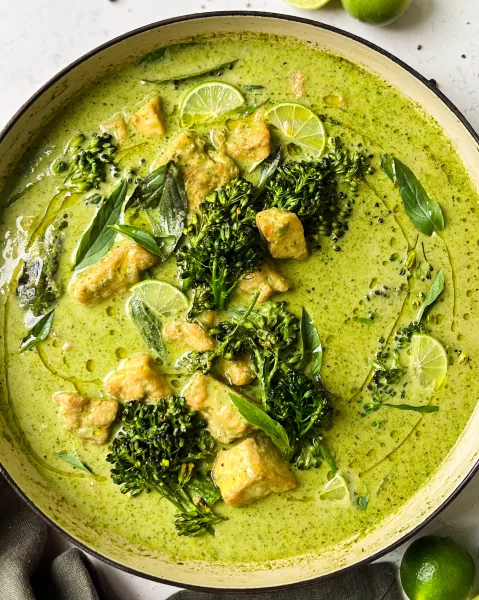 Thai
ThaiThai Green Vegetable Curry
Vegetables and tofu simmered in coconut milk with green curry paste, lime leaves and Thai basil.